


Progressive vs Fixed Jackpot Structures Explained
Fixed jackpots remain static between resets, while progressive pools increase continuously until someone hits the winning combination. This difference affects both potential returns and the frequency of payouts.
In a progressive setup, part of every stake flows into a shared prize fund. The total climbs steadily, sometimes reaching substantial sums over weeks or months. When the winning pattern appears, the entire accumulated amount transfers to one player. After that event, the counter restarts at a preset minimum value.
Fixed alternatives offer smaller, predictable prizes that appear more often. Neither structure changes the underlying probability per spin. Choosing between them depends on whether you prefer frequent modest wins or rare large accumulations.
See also:
- The Mechanics of Progressive and Fixed Jackpots
- Operator comparison: operator details, offers
- Vox Casino UK — what the site actually is and why the licence matters
- PocketWin casino was a mobile-first brand owned by Intouch Games Ltd
- grand ivy casino: Operator details
- Extreme Spins Casino: what you need to know before depositing
- 21luckybet casino: 21LuckyBet overview: casino and sportsbook in one account
- Understanding Return to Player (RTP) and Jackpot Contributions
- Eligibility Rules and the operator Size the operator
- Common Questions About Casino Jackpots
- Playing Responsibly Within UK Regulations
The Mechanics of Progressive and Fixed Jackpots
Where the money comes from before anyone wins it
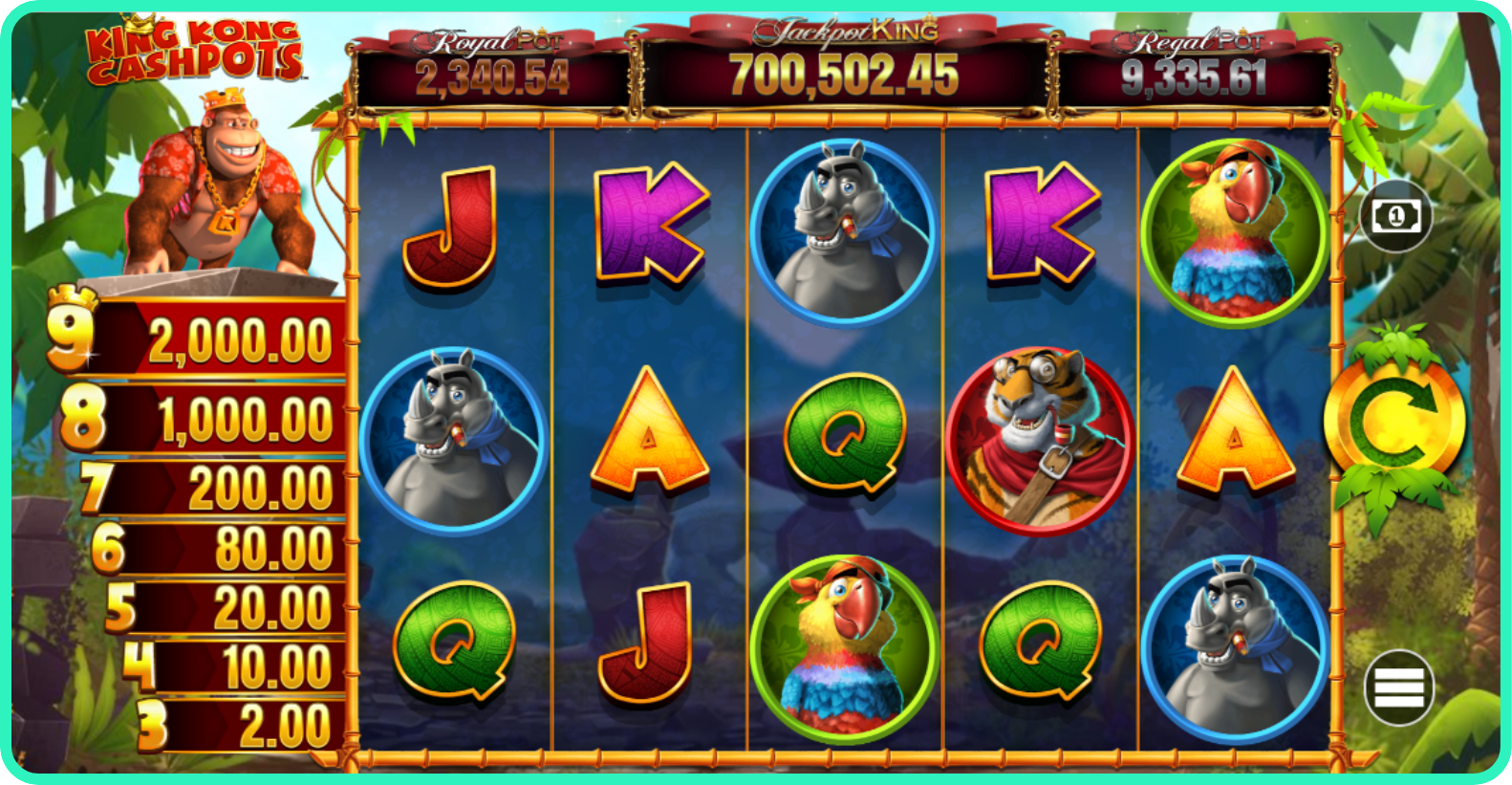
A fixed jackpot is a prize the game already carries. The amount is set by the game’s design and paid from the game’s own economics, so the top prize on a given machine or title stays the same whether ten players have spun it today or ten thousand. A progressive jackpot is different in kind: a small slice of each qualifying stake is diverted into a shared pool, and that pool grows until someone triggers the payout. The prize you see on screen is therefore a running total, not a fixed feature of the game.
That distinction explains a common misunderstanding. A larger progressive figure does not mean the game pays back more generously overall. The contributions that feed the pool have to come from somewhere, and they come out of stakes that would otherwise sit inside the game’s normal prize structure. For a worked illustration only, imagine a game where 1p of every £1 staked is diverted to a pool: £100,000 of staking adds £1,000 to the displayed amount. These figures are hypothetical, not any operator’s terms. The mechanism matters because it shows that the summary number is funded by play, not conjured by the software.
Why the displayed figure moves, resets and sometimes grows slowly
On a networked progressive, several games feed one pool. The counter ticks upward with each qualifying bet across that network, which is why it can climb between one spin and the next. When the trigger condition is met, the pool is paid and typically resets to a seed value defined by the game, then begins climbing again. A local progressive, by contrast, is tied to a single game or a small group, so its pool usually grows more slowly and resets to a lower starting point.
Fixed prizes behave more predictably. The top award is defined in the paytable and does not fluctuate. What varies is whether you reach it: fixed jackpots are usually won through a specific symbol combination or a bonus round instead of through a shared pool reaching any particular size. Treat any reset figure or seed value as part of the game’s design, not as a target you can time.
The contribution you pay whether or not you win
Progressive games commonly carry a lower base return than comparable fixed-prize games because part of each stake is routed to the pool. That trade is the whole bargain: you accept a smaller share of ordinary wins in exchange for a chance at the accumulating prize. It also means the size of the pool at the moment you play does not change your odds of triggering it, since the trigger is governed by the game’s rules instead of by how full the pool looks.
A practical way to read a game’s information screen is to look for a stated contribution rate and the reset value. If neither is published, the mechanics remain opaque, and the honest position is that you cannot calculate your expected share from the display alone. The prize amount tells you what is available; it does not tell you what the game costs you to chase it.
Operator comparison: operator details, offers
The choice that actually separates UK online casinos is not the slot catalogue; it is the cost, speed and reliability of getting your own money back.
Winner casino no deposit bonus | promo code activation steps
| Brand | Details |
|---|---|
| vox casino | Review and guidance portal, not a UKGC-licensed casino; bookmaker + casino listed; ownership and bonus terms unconfirmed, verify licence number before depositing |
| pocketwin casino | Currently closed; no new players accepted since 2023/2024. |
| grand ivy casino | site, app, and dedicated sportsbook reviews confirm Grand Ivy offers sports betting. |
| extreme spins casino | Bonus funds typically carry wagering requirements ranging from 30x to 50x the bonus amount. Free spins winnings usually have their own separate wagering requirement, often around 35x. |
| 21luckybet casino | UK-licensed online casino with slots, live dealer and sportsbook |
Older descriptions of Pocketwin Casino need to be read in light of when it stopped operating.
Vox Casino UK — what the site actually is and why the licence matters
Vox Casino markets itself as a combined bookmaker and casino with slots, live dealer tables, table games and a sportsbook, but the UK-facing domain does not operate those gambling services directly. The site’s own contact page states it does not process deposits or withdrawals, manage player accounts or intervene in disputes with operators; its UK content is positioned as a review and guidance guide covering game rules, access, terms, payment options, account tools and safer play. Independent, verifiable information on ownership, game catalogue, payment methods and bonus terms is limited, so the brand reads as a small or recently launched casino aimed at international markets instead of a firmly established UK operator. This matters because the protections you would expect from a UK Gambling Commission licence — enforceable dispute resolution through IBAS or the Alternative Dispute Resolution service, participation in the GAMSTOP self-exclusion scheme, and compliance with UK advertising and fairness standards — are only present if the actual operating entity holds a valid UKGC account number. A brand without that licence is likely to sit offshore under a Curaçao or similar permit, where player redress is weaker and the GamStop block does not apply. Before committing funds, confirm the operator’s licence number and terms directly on the gambling site, set deposit limits and reality-check reminders, and treat gambling as paid entertainment instead of a way to make money. UK players seeking free confidential advice can contact the National Gambling Helpline on 0808 8020 133, self-exclude via GAMSTOP or block gambling transactions on their bank cards with GamBan.
PocketWin casino was a mobile-first brand owned by Intouch Games Ltd
PocketWin opened in 2010 under Intouch Games Ltd and was built around the mobile market, delivering games through an instant-play browser interface or app downloads for Android, iPhone and iPad. Its library ran on Slot Factory and in-house Intouch Games titles instead of the major third-party providers found across the wider market. The operator used 128-bit SSL encryption to protect account data and backed up access to support through live chat, email and telephone.
grand ivy casino: Operator details
Grand Ivy Casino is an online casino and sportsbook operated by White Hat Gaming Limited, established in 2016, offering over 3,000 slots, live dealer tables, and sports betting under UKGC license number 52894.
Paysafe casinos not on gamstop | voluntary exclusion blocks
Extreme Spins Casino: what you need to know before depositing
Extreme Spins Casino positions itself for players in the United Kingdom, but the site does not hold a licence from the Gambling Commission of Great Britain and is therefore not legally authorised to offer gambling services in the UK. That single fact changes everything about how you should treat the brand: player protection is not backed by UK rules, funds are not protected to the same standard, and dispute resolution falls to the Curaçao Gaming Authority, which handles complaints much more slowly than UK-approved ADR schemes. The brand appears to follow the familiar ‘spins-style’ casino template aimed at British players, and brands with that naming convention are commonly run on the Jumpman Gaming network, which powers dozens of sister sites with near-identical lobbies, bonuses and terms. If Extreme Spins follows that model, expect a slots-first library, a Mega Wheel-style welcome promotion and mobile-only access through your browser instead of a dedicated app.
The bonus terms are where the model matters most to your wallet. Bonus funds typically carry wagering requirements of 30x to 50x the bonus amount, while free spins winnings usually have their own separate requirement, often around 35x. A common pattern on this kind of network is free spin winnings wagered at roughly 65x, with game weightings and conversion caps added on top. The maximum bet while you are playing through a bonus is commonly capped at £5 or lower, and breaching it voids the entire bonus and the winnings attached to it.
Payments work on a broad but uneven basis. The platform lists 32 deposit methods, including e-wallets such as Skrill and Neteller, alongside the usual debit cards. But there are serious reports from UK players who used credit cards and faced withdrawal delays of up to six months. Bonus disputes also surface: one UK player reported depositing £573 across several bonus codes and never received the expected bonuses, leaving the complaint unresolved.
Before players put money in, confirm the current operator, licence and terms in the site footer and full terms and conditions. The operator and licence details on these sites can change without notice.
21luckybet casino: 21LuckyBet overview: casino and sportsbook in one account
21LuckyBet operates as both an online casino and a sportsbook, running on a shared platform from ProgressPlay Limited. That dual setup matters because it means one account covers casino games and live dealer tables alongside sports betting, so your balance and wagering apply across both sections instead of being split. New players opening a UK account will find the welcome offer triggered by a deposit of at least £10 through the casino cashier, with the exact amount sometimes stated as £20 depending on the promotion terms being cited. There is no bonus code required: register and fund the account, then the 25% match up to £50 plus 20 Free Spins on Big Bass Bonanza 1000 activates automatically. What you must watch is the clock — the matched bonus expires 30 days after receipt, while the free spins are only valid for 7 days, and any winnings from those spins carry a 10x wagering requirement.
Understanding Return to Player (RTP) and Jackpot Contributions
The Split Between Base RTP and Jackpot Allocation
Return to Player is not a single, fixed number that applies uniformly across every spin of a jackpot game. It represents the theoretical percentage of wagered money a slot returns to players over millions of spins, but this aggregate figure is built from two distinct pools: the base game payout and the jackpot contribution. In standard slots without progressive features, the entire RTP budget funds the base paytable. When a jackpot mechanic is active, a portion of every bet—often between 1% and 5%, depending on the specific title—is siphoned off to feed the prize pool. This reallocation fundamentally changes the mathematical landscape of the game.
Consider a hypothetical slot with a total RTP of 96%. If 2% of each wager contributes to a progressive jackpot, the base game effectively operates at a 94% RTP. The house edge on non-jackpot outcomes increases by exactly that amount. Players are paying an additional premium for the chance to win the top prize, which means the frequency and size of regular wins must shrink to accommodate the jackpot allocation. The advertised RTP remains accurate as a long-term average, but it masks the dual-speed nature of the underlying mathematics.
Volatility Distortion Through Contribution Mechanics
Jackpot contributions do more than reduce base payouts; they alter volatility profiles in ways that can mislead players relying solely on summary RTP figures. Progressive jackpots typically require massive prize pools to be funded by small percentages of many bets over extended periods. This creates a high-variance environment where the base game pays out less frequently or in smaller amounts, while the potential upside is concentrated in rare, large events.
Fixed jackpots operate differently. Their contribution rate may be lower, and the prize itself does not grow with play volume. However, the mechanism still diverts part of the RTP away from standard symbol combinations. A player choosing between two games with identical 96% RTPs might experience vastly different session outcomes if one allocates 3% to a fixed jackpot and the other retains the full budget for base symbols. The latter offers more frequent wins, while the former trades consistency for occasional larger payouts tied to the fixed prize trigger.
Understanding this distinction helps set realistic expectations. High total RTP does not guarantee a smooth gameplay experience when significant portions are locked behind jackpot mechanics. The effective return during normal play is always lower than the published figure suggests.
1Red casino promo code no deposit cash bonus mechanics
Reading Game Information Panels Correctly
Most regulated online casino platforms disclose both total RTP and, in some cases, jackpot contribution rates within their game information screens. These panels serve as primary sources for verifying how much of your wager supports the base game versus the prize pool. Where contribution percentages are not explicitly listed, comparing the base paytable against similar non-jackpot titles can reveal implicit reductions in standard win values.
Some providers separate progressive and fixed jackpot contributions into distinct line items, showing exactly how each mechanic affects overall return structure. This transparency allows informed choices about whether the trade-off between reduced base payouts and increased top-prize potential aligns with personal preferences. Without such data, assumptions about equal RTP distribution across all game types remain speculative.
The game lobby on Extreme Spins Casino prioritises slots, with titles from NetEnt, Pragmatic Play, Eyecon, Microgaming, Blueprint and Playson. Table games and live dealer rooms are usually limited. Slots from this template generally return between 94 and 96 per cent to the player over time, though each title sets its own figure. A player should check the information screen on an individual game before wagering, because volatility and prize frequency vary between releases. High-volatility slots pay less often but can produce larger wins, while low-volatility games return smaller amounts more regularly. The difference matters because it shapes how quickly a bankroll moves during a session. Live tables, when available, usually come from Pragmatic Play and follow standard roulette and blackjack odds.
Eligibility Rules and the operator Size the operator
The Minimum Bet Condition
Most progressive jackpots are triggered by a specific coin value or bet size, not merely by landing the winning symbols. A player spinning at £0.20 per line might hit the combination required for a mini jackpot but be ineligible for the mega prize because the stake fell below the threshold set in the game’s mathematics model. This rule exists to protect the fund’s growth rate; if every low-stake spin could claim the top tier, the pot would deplete faster than contributions replenish it. Fixed jackpots often have lower entry barriers, sometimes allowing qualification on any active payline regardless of total stake, but the highest tiers almost always demand maximum or near-maximum wagers.
Game-Specific Thresholds
The exact figure needed to qualify varies wildly between titles and providers. In some popular slot series, betting the minimum required to activate all paylines is sufficient for the major jackpot, while others require a specific multiplier of the base bet. Consider a hypothetical game where the main jackpot requires a wager of at least £1.00 per spin. A player betting £0.90 across ten lines might see the jackpot symbols align on screen, yet the win counter remains static because the total stake did not meet the eligibility criterion. These conditions are hard-coded into the RNG logic. They cannot be overridden by luck or timing. Players must check the information or help screen within the game interface, which details exactly how many coins per line are needed to compete for each prize tier. Ignoring this step results in missed opportunities that feel like technical errors but are actually strict adherence to the rules.
Multi-Player Pool Dynamics
When multiple players contribute to a single networked jackpot pool, their individual bet sizes determine their share of the prize only if they meet the qualification standard. Non-qualifying bets still feed the growing pot through the deduction percentage applied to every spin, effectively subsidising those who play at higher stakes. This creates an asymmetry: you are paying into the fund without holding a ticket for the draw. For new customers exploring these games, understanding this flow is critical before committing funds. If the goal is to chase the largest available prize, playing below the required threshold is mathematically inefficient. It reduces potential returns while maintaining full volatility exposure. Conversely, if the objective is entertainment with smaller, more frequent wins, lower stakes may suffice for minor prizes. The decision rests on whether the player seeks the life-changing top tier or the steady accumulation of mid-range rewards. Always verify the current contribution rate and minimum bet requirement displayed in the game’s audit section, as these parameters can change with software updates.
Common Questions About Casino Jackpots
Can I play jackpot games using bonus funds?
Usually not. Most welcome offers exclude progressive slots from their wagering requirements. If you place a bet on an excluded game while a bonus is active, the stake may be voided, and any resulting winnings confiscated. Fixed jackpots within standard table games often fare better, but this varies by operator.
Ducky luck casino legit, mobile gaming experience
Look for the "game weighting" or "excluded games" list in the terms. Playing a jackpot slot with bonus money risks forfeiting the prize if the rules prohibit it.
Does a jackpot win trigger the same identity checks as a standard withdrawal?
Yes. The size of the payout rarely changes the verification steps required, though it may accelerate them. Operators typically enforce Know Your Customer (KYC) protocols before releasing any significant sum, regardless of whether it came from a progressive pool or a fixed prize. You might find that small withdrawals process instantly, while larger amounts pause for manual review.
Ensure your account documents are already approved. Submitting proof of address and identification immediately after a win can introduce delays during the critical processing window. Check the specific threshold for automated payouts in the banking section of your chosen platform.
Do I need to register for every network jackpot?
No. Network prizes accumulate across multiple operators linked to a single provider. Winning requires playing the eligible game at any participating site. You do not need separate accounts for each casino hosting the same title, provided the software version supports the specific jackpot tier.
Playing Responsibly Within UK Regulations
Online casinos in the UK operate under rules set by the Gambling Commission, requiring robust player protections. Age checks are mandatory, preventing those under 18 from accessing real-money games. You can manage risk by using built-in tools that limit deposits, session times, or wagers. These controls help maintain a clear boundary between leisure and financial strain. Should gambling stop being enjoyable, self-exclusion schemes like GAMSTOP provide a unified way to block access across multiple platforms simultaneously. For immediate assistance, contact the National Gambling Helpline (0808 8020 133) or visit GamCare and BeGambleAware for free support.